Wellbeing
The Secrets of Traditional Thai Massage
5 min read
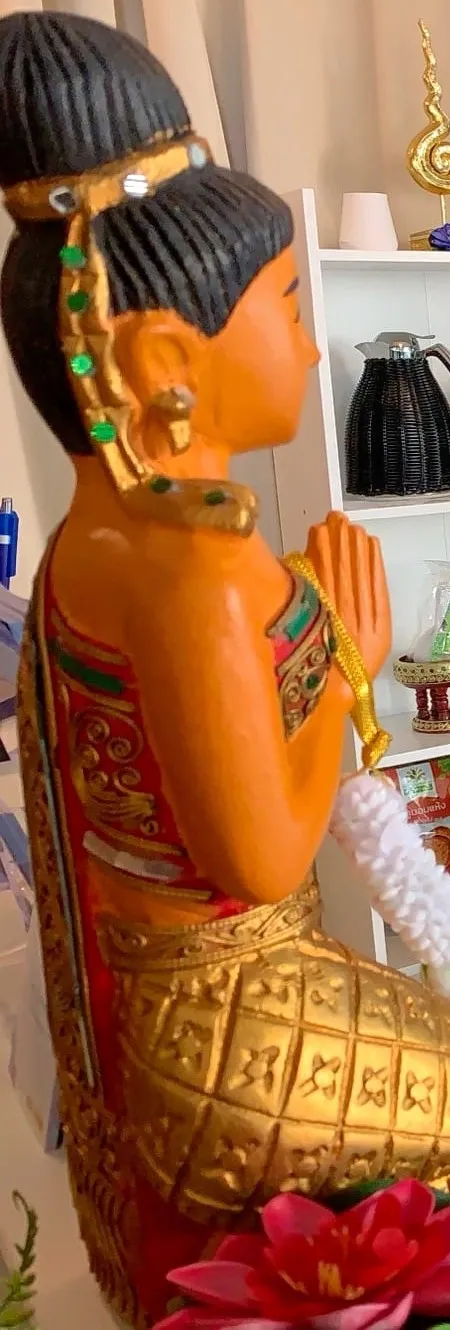
A centuries-old tradition
Traditional Thai massage, or “Nuad Boran”, is far more than a bodywork technique. According to tradition, it grew out of the teachings of Jivaka Kumar Bhaccha (Shivago Komarpaj), a legendary physician and contemporary of the Buddha. It draws on Indian (Ayurvedic) and Chinese influences, and was passed down for centuries in Buddhist temples (Wats), where it was regarded as a spiritual practice of “Metta” (loving-kindness).
In 2019, UNESCO inscribed Nuad Thai on its list of the intangible cultural heritage of humanity.
The core principles
Thai massage draws on a traditional view of the body as crossed by energy lines, known as “Sen”. Much like the Nadis of Ayurveda or the meridians of Chinese tradition, these channels are said to carry the life force. Tradition counts 72,000 of them, but in practice the focus is on the 10 main lines (Sen Sib). The practitioner uses thumbs, palms, elbows, knees and feet to apply rhythmic pressure and stretches along these lines, which, in this tradition, releases blockages and helps energy to flow.
The four massage positions
Traditional Thai massage is performed in four main positions:
- Lying on your back: to work the legs, arms and torso
- Lying on your side: to stretch the hips and shoulders
- Lying on your front: to massage the back and legs
- Sitting up: to work the upper back, neck and shoulders
What Thai massage can bring you
Everyone experiences it differently, but this is what people most often feel after a session:
- A feeling of suppleness: gentle stretches leave the body feeling freer and more mobile
- Deep relaxation: the rhythm of pressure and stretching helps you let go
- Everyday tension eased: the neck, shoulders and back feel lighter
- A calmer mind: the session is a real break from the pace of your day
- A sense of balance: time to reconnect with your body
The philosophy of Thai massage
Beyond the technique, traditional Thai massage is deeply rooted in Buddhist philosophy. Traditional practitioners often begin with a quiet moment of reflection to focus on the session ahead. This approach makes the massage an almost meditative experience, for both giver and receiver.
“Metta”, or loving-kindness
An essential part of authentic Thai massage is “Metta”, or loving-kindness. The practitioner approaches each session with care and attentiveness, creating a calm space where you can relax with complete peace of mind.
What happens during a session?
A traditional Thai massage session usually lasts between 60 and 120 minutes. Unlike Western massages, you stay dressed in comfortable clothing. At our salon, it is carried out on a massage table, and the practitioner uses their body weight to apply the pressure and stretches.
Tips for your first session
- Wear loose, comfortable clothing
- Avoid eating a heavy meal before your session
- Let your practitioner know about any sensitive or painful areas
- Breathe deeply and let yourself go
- Drink some water after your session
Contraindications and precautions
Thai massage involves sustained pressure and stretching, so it isn’t suitable in every situation. Ask your doctor before booking, or avoid massage, if you have:
- Acute problems: fever, inflammation, or a recent injury (fracture, torn muscle)
- Circulation problems: phlebitis, thrombosis or severe varicose veins
- Particular conditions: osteoporosis, an unstable heart condition
- Pregnancy: some positions and pressures are not advised; talk to your doctor and let us know when you book
An experience worth having
Traditional Thai massage is much more than just a massage: it’s a moment of wellbeing that does both body and mind good. Whether you want to release everyday tension, catch your breath or simply treat yourself to some time out, Thai massage is a lovely experience to discover.
Sources
- UNESCO - Intangible Cultural Heritage - Nuad Thai inscribed on UNESCO’s list of the intangible cultural heritage of humanity
- International Thai Massage School (ITM) - One of the leading schools in Chiang Mai for traditional teaching